
Property Management in Kihei: A Comprehensive Guide for Investors in 2026
Property management in Kihei has become increasingly sophisticated as travel patterns and regulations evolve across Maui. According to Hawaii Tourism Authority, Maui welcomed roughly 2.7 million visitors in 2023, with Kihei capturing a meaningful share of vacation stays. That visitor base, combined with a constrained housing market, creates both opportunity and risk for investors. In 2026, the difference between strong returns and underperformance often comes down to precise local knowledge, consistent oversight, and strategic property management decisions tailored to Kihei’s coastal environment.
Why is property management in Kihei so important for 2026 investors?
Property management in Kihei operates at the intersection of tourism, local housing needs, and strict county regulations. According to Redfin, Kihei home sale prices in early 2025 typically ranged from $900,000 to around $1.4M, which places real pressure on investors to protect every percentage point of return. Professional management helps safeguard those assets against accelerated coastal wear, complex tenant laws, and fluctuating visitor demand, especially in areas close to South Kihei Road and Piilani Highway.
Regulatory compliance forms another pillar of effective property management in Kihei. Maui County enforces zoning and permitting requirements that differ between resort-zoned buildings and standard residential neighborhoods such as Keonekai Heights and Piilani Village. According to Maui County, classification differences can alter property tax rates by more than 50% between owner-occupied and investment categories. Skilled management keeps documentation, permits, and use patterns aligned with county rules, reducing costly penalties or forced rental interruptions.
Local climate realities also shape property management in Kihei. Persistent salt air along Waipuilani Road and near Kamaole Beach Park I, II, and III accelerates corrosion on railings, fixtures, and air-conditioning units. Deferred maintenance might save $200 or $300 in the short term but risk repair invoices in the range of $8,000 to $12,000 for systems replacement. Managers who schedule regular inspections, filter changes, and exterior sealing preserve building envelopes and sustain long-term rentability in a harsh but desirable oceanfront setting.
Finally, occupancy planning in Kihei requires constant data monitoring. According to vacation rental analysis from AirDNA, popular Maui resort zones often see seasonal occupancy swings between roughly 55% and 85%. Targeted pricing, minimum-stay rules, and marketing campaigns timed around winter peaks and slower fall months help stabilize cash flow. Property management teams that track these cycles unit by unit, rather than broadly across Maui, typically deliver higher net income, particularly in complexes along South Kihei Road and near Kalama Park.
What rental strategies work best in Kihei’s short-term and long-term markets?
Rental strategy in Kihei starts with zoning and building rules. Some complexes, such as those near Cove Park and Kalama Beach Park, permit legally operated vacation rentals, while others along Piilani Highway prioritize long-term residents. According to Zillow, advertised long-term rents in Kihei often fall between $2,200 and $3,500 per month as of late 2024. Managers help investors align lease terms, advertising channels, and house rules with building bylaws so that income plans never conflict with association enforcement.
Evening strolls through the blocks surrounding Azeka Shopping Center reveal how different rental strategies play out on the ground. The soft glow from restaurant patios at Nalu's South Shore Grill and the subtle scent of grilled fish linger in the humid air, while the low murmur of conversation mixes with distant surf from Maalaea Bay. Buildings hosting short-term guests often show rolling luggage and arrival shuttles, whereas long-term communities closer to Lokelani Intermediate School feel quieter, with families unloading groceries from Foodland Kihei.
Short-term rentals can generate higher gross income but require more intensive property management in Kihei. According to performance ranges observed by AirDNA, Maui vacation rentals in strong locations sometimes achieve annual occupancy around 70%, but shoulder seasons can drop below 50%. Nightly pricing needs weekly review, and guest messaging, cleanings, and maintenance must operate on tight schedules. Long-term rentals, by contrast, often favor stability with one-year leases, slower turnover, and more predictable monthly cash flow from tenants working in nearby employment centers.
Hybrid approaches occasionally succeed in Kihei where association rules permit both 30-day and multi-month stays. Snowbird tenants arriving from the mainland during winter can commit to 60- or 90-day leases, smoothing seasonality without the intensity of weekly guest changeovers. Property managers design calendars that block time for deep maintenance between stays, particularly in buildings near Kihei Regional Park and Waipuilani Park, where sun and trade winds demand regular attention. Each strategy requires precise documentation to stay consistent with Maui County’s evolving ordinances.
How do operating costs and fees affect returns in Kihei?
Operating costs in Kihei span far beyond standard mortgage and insurance payments. According to estimates compiled from current surveys by BiggerPockets, professional property management fees for long-term rentals nationally often range from 8% to 12% of collected rent, while vacation rental management can reach 20% to about 35% when marketing and cleaning coordination are included. In Kihei, ocean proximity, resort-style amenities, and intensive cleaning cycles commonly push expenses toward the upper half of those ranges, especially in beachfront complexes.
Maintenance planning also weighs heavily on returns. Roof replacements in coastal Maui settings can fall anywhere between roughly $30,000 and $60,000 for small buildings, based on contractor ranges reported through HomeAdvisor. While associations along South Kihei Road and Kenolio Road often budget for these expenses, individual condo owners still absorb special assessments. Effective property management in Kihei involves close monitoring of association reserves, board meeting minutes, and upcoming capital projects so investors can project cash needs several years ahead and avoid surprise disruptions to net income.
Inside a well-managed condo near Kamaole Beach Park III, freshly laundered linens carry a faint scent of salt and detergent, ceiling fans hum steadily, and cool tile flooring under bare feet contrasts with the lingering warmth from the afternoon sun. From the lanai, the shimmer of the Pacific beyond South Kihei Road mixes with the distant laughter rising from barbecue areas below. That atmosphere depends on consistent investment in cleaners, landscapers, and maintenance technicians whose coordinated efforts define the guest experience and, ultimately, the property’s financial performance.
Insurance and utilities further influence the viability of property management in Kihei. Coastal wind exposure, potential tsunami risk zones, and hurricane considerations push some premiums above mainland equivalents by an estimated 20% to 40%, based on comparisons assembled by ValuePenguin. Electricity from Hawaiian Electric, when combined with air-conditioning use, can easily exceed $250 per month in frequently occupied units. Managers who implement smart thermostats, efficient lighting, and guest guidelines often trim utility costs, preserving margins while maintaining the comfort expectations common in Maui’s resort-adjacent neighborhoods.
Which Kihei locations matter most for occupancy and guest experience?
Location selection in Kihei influences occupancy more than almost any other factor. Properties along South Kihei Road within a short walk of Kamaole Beach Park I, II, and III offer immediate sand access, sunset views, and convenient crossings, which often command premium nightly rates. According to walkability data from Walk Score, central Kihei areas around Azeka Shopping Center reach scores near 60, indicating that many errands can be accomplished without a car. That walkability appeals strongly to visiting guests and long-term renters alike.
Schools add another layer for year-round residents. According to GreatSchools, campuses such as Kihei Elementary School, Lokelani Intermediate School, and Kihei Charter School each serve substantial portions of the community, with published ratings guiding many family decisions. Properties within a few miles of these schools, especially near Lipoa Street and Ohukai Road, frequently attract stable tenants with multi-year housing plans. Property management in Kihei that highlights proximity to education, parks like Kihei Regional Park, and employment in nearby Wailea often experiences lower vacancy in the long-term segment.
Beach adjacency, however, is not the only determinant of success. Complexes tucked slightly mauka of Piilani Highway can offer quieter settings, cooler evening breezes, and easier access to Maui Nui Golf Club. For some renters, the ability to reach Wailea’s resort corridor in under 15 minutes while avoiding heavy oceanfront traffic outweighs direct beach views. Managers who understand these micro-preferences position listings to the right audience segments, aligning marketing language, photography, and amenity descriptions with each sub-neighborhood from Keonekai Heights to North Kihei.
Transportation convenience also matters for occupancy. Condos near major bus stops on South Kihei Road provide options for tenants working in Kahului or Wailuku, reducing dependence on a second car that might cost another $400 to $700 per month. Proximity to grocery stores like Times Supermarket and Safeway Kihei simplifies daily living for residents without resort dining budgets. Careful mapping of commute times, bus routes, and bicycle access along Kihei’s coastal corridor allows management teams to match tenants with properties that fit actual lifestyle demands rather than generic tourist expectations.
How should investors select a property management partner in Kihei?
Choosing a property management partner in Kihei requires attention to experience, transparency, and communication systems. According to industry research from National Association of Residential Property Managers, portfolios exceeding 300 doors often rely heavily on standardized processes, while smaller firms may provide more personalized service. In Kihei, that balance affects how quickly maintenance requests at buildings like Kihei Villages or Haleakala Gardens are addressed and how attentively managers monitor association rule changes that could impact rental rights.
Fee structures also warrant close analysis. Some Kihei management companies charge flat monthly percentages on gross rent, while others add separate marketing, cleaning coordination, and inspection fees that together might increase effective costs by another 3% to 5%. Transparent reporting with itemized owner statements, ideally delivered through secure online portals, helps investors track net operating income accurately. Firms experienced with both short-term and long-term assets along South Kihei Road, Kenolio Road, and in neighboring Wailea can tailor packages to owners with mixed portfolios.
Local relationships provide an often-underrated selection criterion. Managers who maintain long-standing ties with reliable vendors, from air-conditioning technicians in North Kihei to landscapers serving Waipuilani Park–adjacent complexes, reduce downtime and avoid last-minute premium charges. Consistent vendor performance typically translates into faster unit turns between tenants, lower complaint volumes, and better online reviews from guests staying near Kalama Park or Kealia Pond National Wildlife Refuge. Over time, that reputation supports higher achievable rents and stronger renewal rates.
Track records should extend beyond marketing claims. Prospective partners in property management in Kihei ideally demonstrate low eviction rates, minimal code violations, and strong occupancy in documented portfolios. Reference checks with owners whose properties sit along both South Kihei Road and quieter mauka streets near Piilani Highway reveal how firms respond during emergencies, supply chain disruptions, or tourism slowdowns. The right match aligns technology capabilities, on-island staffing, and cultural understanding of Maui’s communities so that investment goals remain compatible with neighborhood character and local expectations.
The 2.7 million visitor figure cited at the start of this guide reflects the scale of demand that continues to shape property management in Kihei, while also hinting at exposure to market swings. That same volume underscores the necessity of disciplined planning around occupancy, maintenance, and regulation for any asset along this coastline. The Hawaii Association of Realtors provides statewide data and policy updates that help contextualize Maui trends within broader market shifts. Investors who register listing alerts, monitor neighborhood-level statistics monthly, and schedule on-site tours before the peak winter season in January position themselves to act decisively. Those who delay beyond the late-spring uptick in competition often encounter reduced choices, higher prices, and slimmer margins in Kihei’s tightly supplied rental inventory.
FROM OUR BLOG

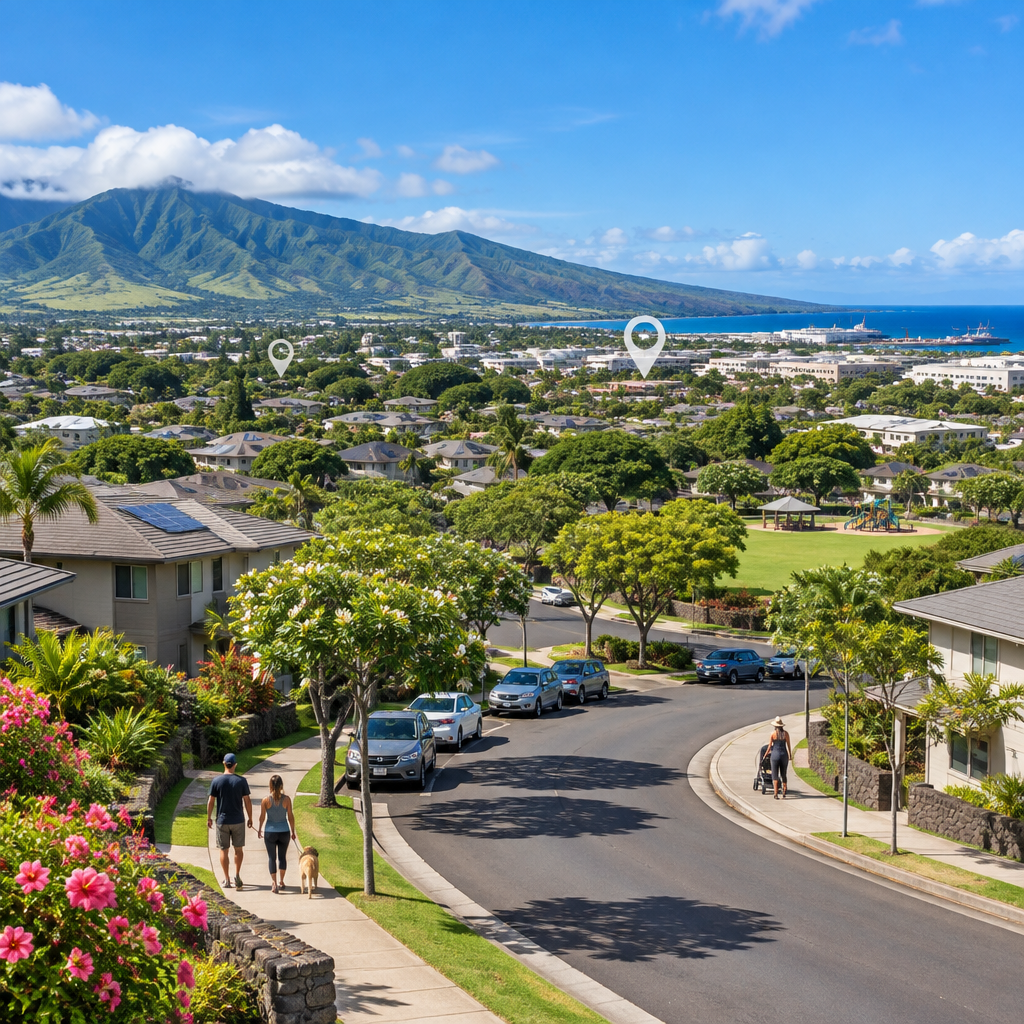
Relocating to Central Maui: Essential Tips for a Smooth Transition in 2026
Relocating to Central Maui: Essential Tips for a Smooth Transition in 2026 Relocating to Central Maui in 2026 requires advance planning around housing, employment, and daily logistics. According to U.S. Census Bureau QuickFacts, the broader Maui County population ranges between 165,000 and 170,000 r

Discover Kihei, HI Homes for Sale: Your 2026 Guide to Paradise Living
Discover Kihei, HI Homes for Sale: Your 2026 Guide to Paradise Living Kihei on Maui’s sunny south shore combines ocean access, resort conveniences, and residential neighborhoods in a compact coastal strip. The area’s population was about 21,000 in 2020, according to U.S. Census Bureau estimates, giv